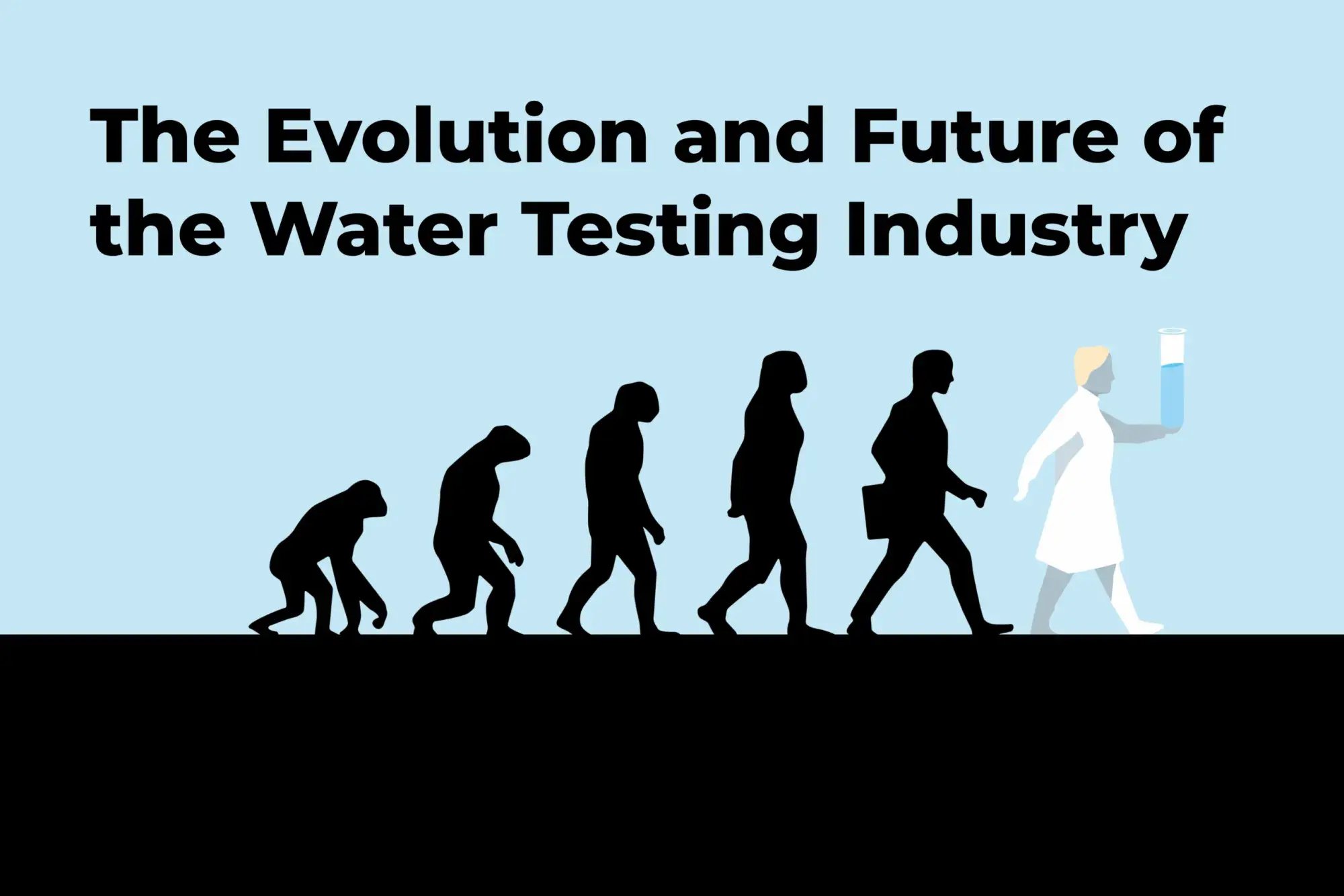
How EPA rules changed water testing labs from 2012 to 2022, and what comes next
By Roxana Florea·
In short
From 2012 to 2022, many of the big changes for US water labs came from EPA rules: written QC steps for Clean Water Act methods, a revised coliform rule, new rounds of unregulated contaminant monitoring, and revised lead and copper rules. In our view, the next ten years will center on PFAS. EPA set drinking water limits for six PFAS in 2024. In May 2026 it proposed to keep the PFOA and PFOS limits and to drop the rest.
Ask a QA manager who has been at the bench since 2012 what changed, and you get a list of rules: QC written into the SOPs, a new coliform rule, more rounds of UCMR, lead and copper again, and now PFAS. The dates below come from EPA pages and federal rules. Where we guess at the future, including tools such as AI, we say so.
What changed for water testing labs from 2012 to 2022?
Written QC steps for Clean Water Act methods (2012)
Quality control (QC) is the set of checks that shows a lab’s results can be trusted. A federal rule added in May 2012 spells out QC for Clean Water Act testing. When an approved method lacks its own QC steps, 40 CFR 136.7 asks the lab to write twelve QC elements into its SOP. They include, for example:
- a demonstration of capability and a method detection limit;
- blanks, spiked blanks and matrix spikes;
- initial and continuing calibration checks;
- control charts and corrective action;
- how batches are defined, and how often each QC check runs.
A revised coliform rule (2013 to 2016)
EPA published the Revised Total Coliform Rule on February 13, 2013. It revised the 1989 Total Coliform Rule. Public water systems had to follow it from April 1, 2016, or from an earlier date set by their state. It set a limit for E. coli and added steps for assessment and corrective action when results show a system may be at risk (EPA).
Monitoring for unregulated contaminants
Unregulated contaminants are substances that have no drinking water limit yet. The Safe Drinking Water Act asks EPA to set monitoring for priority unregulated contaminants every five years, and to make the results public. The fifth round, UCMR 5, runs from 2022 to 2026, and EPA keeps a list of the labs it approved for it (EPA).
Disinfection byproducts
Disinfection byproducts are chemicals that can form when disinfectants react with naturally occurring materials in the water. Older rules kept shaping this work. The Stage 2 Disinfectants and Disinfection Byproducts Rule tightens monitoring for two groups of them, total trihalomethanes (TTHM) and haloacetic acids (HAA5) (EPA).
Data can help here. For example, a plant that wants fewer byproducts could compare its past TTHM and HAA5 results with source water, weather and dose records. Patterns in that data could point to treatment changes worth testing. This is an example, not a study result.
Lead and copper rules (2021 and 2024)
The Lead and Copper Rule is the EPA rule that has systems sample drinking water at customer taps. If lead tops an action level of 15 ppb, or copper tops 1.3 ppm, in more than 10% of the taps sampled, the system must take further steps (EPA). EPA revised the rule in 2021, with steps such as better protection for children at schools and child care centers and finding lead service lines. In October 2024, EPA issued the Lead and Copper Rule Improvements. They require systems to find and replace lead pipes within 10 years, and they call for more rigorous testing of drinking water and a lower threshold for action (EPA). For labs, that could mean more tap samples to log, test and report.
| Rule or method | Date (from the source) | What it means for labs |
|---|---|---|
| 40 CFR 136.7, QC elements | Added May 18, 2012 (77 FR 29813) | Twelve QC elements in the SOP when a method lacks its own QC |
| Revised Total Coliform Rule | Published February 13, 2013; in force from April 1, 2016 | An E. coli limit, plus assessment and corrective action steps |
| Revised Lead and Copper Rule | 2021 | Steps such as finding lead service lines and better protection at schools and child care centers |
| UCMR 5 | 2022 to 2026 | Monitoring for unregulated contaminants, by EPA-approved labs |
| PFAS drinking water rule | Announced April 10, 2024 | Limits for six PFAS; PFOA and PFOS at 4.0 parts per trillion |
| Lead and Copper Rule Improvements | Issued October 2024 | Lead pipes found and replaced within 10 years; more rigorous testing |
| EPA Method 1633A | Proposed for approval in December 2024 | 40 PFAS in wastewater, soil, biosolids and more |
| Two PFAS proposals | Announced May 18, 2026 | Keep the PFOA and PFOS limits, with an option to ask for two more years, to 2031; drop the PFHxS, PFNA, HFPO-DA and mixture limits |
| UCMR 6 | 2027 to 2031 | The next monitoring round, with its own lab approval program |
What could the next ten years bring for water testing?
PFAS testing
PFAS are per- and polyfluoroalkyl substances, the chemicals behind EPA’s newest drinking water limits. On April 10, 2024, EPA announced limits for six PFAS in drinking water. PFOA and PFOS were set at 4.0 parts per trillion. On May 18, 2026, EPA proposed two rules: one keeps the PFOA and PFOS limits, with an option for systems to ask for two more years, to 2031. The other would drop the limits for PFHxS, PFNA and HFPO-DA, and the mixture limit that also covers PFBS (EPA).
For wastewater and other samples, EPA has published Method 1633A for 40 PFAS in wastewater, surface water, groundwater, soil, biosolids, sediment, landfill leachate and fish tissue. It was proposed for approval in December 2024. EPA says it is not nationally required until EPA finishes that rule (EPA). See our guide to PFAS testing and Method 1633A.
Our view: whatever the final rules say, PFAS work is likely to stay a large part of what water labs test for.
The next monitoring round
EPA lists UCMR 6 for 2027 to 2031, with a lab approval program (EPA). Labs that want this work could plan for the approval steps early.
New tools: AI, field sensors and tamper-evident records
This part is a forecast, not a finding. In the next ten years:
- AI and machine learning could help spot odd results, plan sampling and flag trends.
- Field sensors and small test kits could move some screening out of the lab, with the lab still running the tests the rules require.
- Tamper-evident records, such as ledgers that show any change, could build trust between labs, clients and regulators. In our view, a plain audit trail and a chain of custody record can already do much of this.
What does this mean for a lab today?
- Watch EPA’s pages. The May 2026 PFAS rules are proposals as of 26 November 2026, so check their status before you plan.
- Keep QC in your SOPs. Make sure each method’s QC steps are written down, as 40 CFR 136.7 asks when a method lacks them.
- Keep the record in one place. Each sample’s results, QC, review and changes should be quick to show.
- Check how you report. If you send drinking water results to the state, see our post on CMDP reporting.
A LIMS does not make a lab accredited. Accreditation belongs to the lab. Prisma LIMS keeps chain of custody and a full audit trail of who changed what and when.
Questions labs ask about these changes
What is UCMR?
The Unregulated Contaminant Monitoring Rule. Every five years, EPA sets monitoring requirements for priority substances that have no drinking water limit yet, and makes the results public. UCMR 5 runs from 2022 to 2026, and UCMR 6 from 2027 to 2031.
Are the 2024 PFAS drinking water limits still in place?
EPA’s page says that in May 2026 it proposed to keep the PFOA and PFOS limits, with an option for systems to ask for two more years, to 2031. It also proposed to drop the limits for PFHxS, PFNA and HFPO-DA, and the mixture limit. Those are proposals. Check EPA’s page for the current status.
Do labs have to use Method 1633A?
Not nationally yet. EPA proposed it for approval in December 2024 and says it is not nationally required until that rule is final. A permit can still name it, so check yours.
The bottom line
The last ten years brought written QC steps, a revised coliform rule, new rounds of contaminant monitoring and revised lead and copper rules. In our view, the next ten look set to center on PFAS, new UCMR rounds and better data tools. Rules move, so check each source before you act on it.
Editorial note: Our methodology for this post: we read each source below on 26 November 2026 and took every date from it. Lines marked as a forecast or “our view” are our opinion.
Looking at LIMS options for your lab? See how Prisma LIMS works as an environmental LIMS for water, wastewater and soil labs.
Sources (8)
- 40 CFR 136.7, Quality assurance and quality control (77 FR 29813, May 18, 2012) (checked 26 November 2026). law.cornell.edu
- EPA: Revised Total Coliform Rule and Total Coliform Rule (checked 26 November 2026). epa.gov
- EPA: Monitoring Unregulated Contaminants in Drinking Water (checked 26 November 2026). epa.gov
- EPA: Stage 1 and Stage 2 Disinfectants and Disinfection Byproducts Rules (checked 26 November 2026). epa.gov
- EPA: Per- and Polyfluoroalkyl Substances (PFAS), Final PFAS National Primary Drinking Water Regulation (checked 26 November 2026). epa.gov
- EPA: CWA Analytical Methods for Per- and Polyfluorinated Alkyl Substances (PFAS) (checked 26 November 2026). epa.gov
- EPA: Lead and Copper Rule (checked 26 November 2026). epa.gov
- EPA: Lead and Copper Rule Improvements (checked 26 November 2026). epa.gov